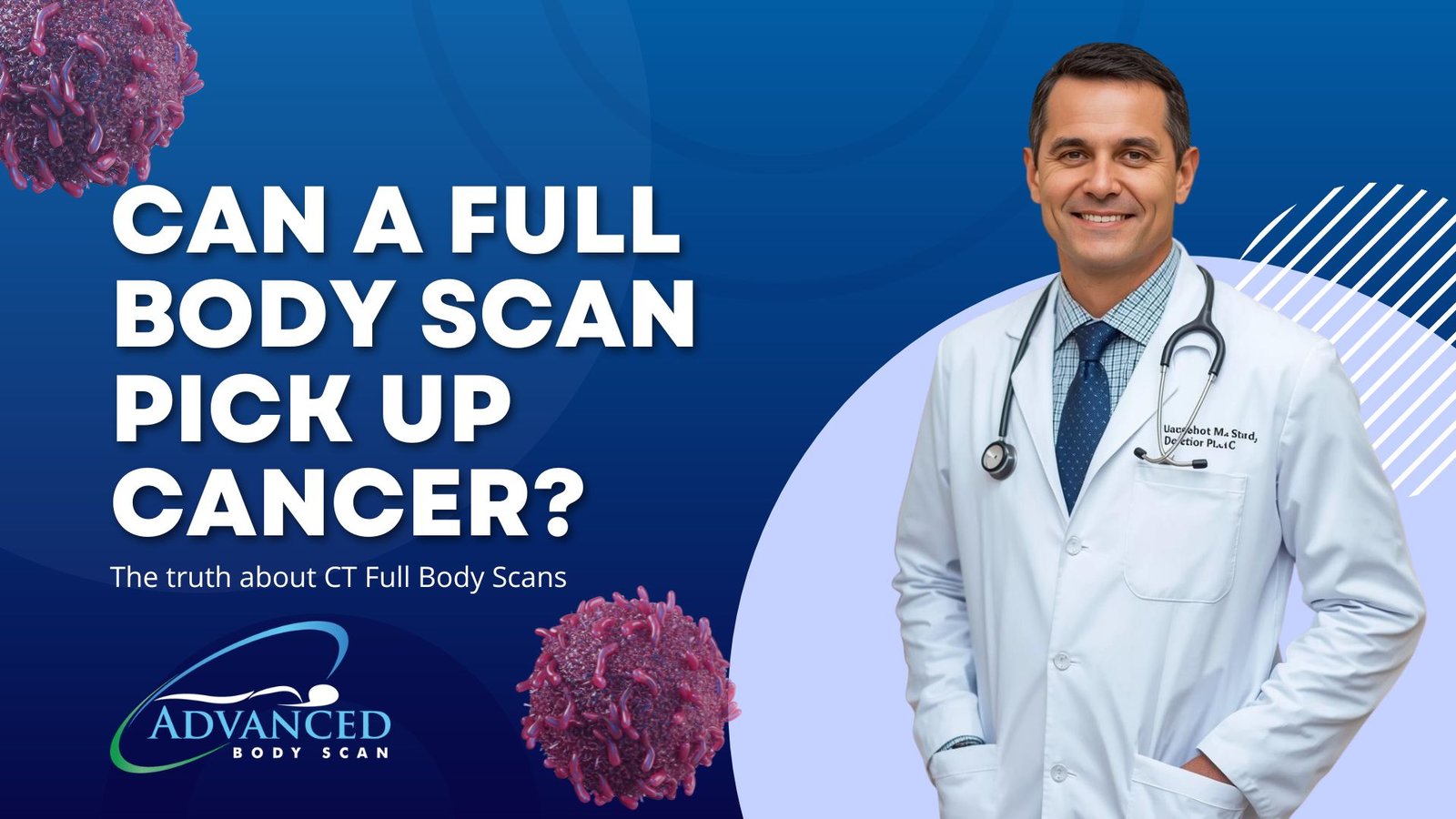
Cancer is the second leading cause of death in the United States, and for many types, outcomes are strongly tied to how early the disease is found. That's why a common question about full body scans is simple: can one actually pick up cancer before symptoms start?
This explainer covers how CT imaging finds suspicious changes, which cancers it is best positioned to reveal, how it compares with MRI, and what happens after a scan.
Key Points
- CT imaging can reveal tumors, nodules and other changes that may represent early-stage cancer, often before symptoms appear.
- Imaging can flag a suspicious finding, but confirming cancer typically requires additional testing.
- CT is faster than MRI and better suited to imaging the lungs and heart.
- Finding cancer at an earlier stage is generally linked to better survival.
How CT Finds Possible Cancer
A full body CT scan produces high-resolution images of internal organs. Radiologists review those images for irregularities — small masses, cysts or nodules — that could signal an early cancer or another condition worth investigating.
Many cancers start in organs where they can grow silently for some time, such as the lungs, liver, kidneys and pancreas. Imaging gives physicians a way to look at those organs directly.
Cancers Imaging Is Well Positioned to Reveal
- Lung cancer: the leading cause of cancer death in the U.S. CT is particularly sensitive for lung nodules.
- Colon and rectal cancer: which can develop without symptoms for years. Dedicated virtual colonoscopy imaging is designed specifically for the colon.
- Kidney and pancreatic cancer: both known for being hard to catch early.
- Liver and thyroid abnormalities: which may point to early disease.
No scan detects every cancer. Advanced Body Scan lists more than 500 conditions its protocols may identify, with particular strength in high-risk organs like the lungs, liver, pancreas and kidneys.
Why Stage at Diagnosis Matters
According to the American Cancer Society, survival rates are dramatically higher for many cancers when they're found at an early, localized stage. Colon cancer caught early, for example, has a five-year relative survival rate of roughly 90%. Lung cancer found before it spreads also has a far better outlook than lung cancer diagnosed at an advanced stage.
That gap is the reason preventive imaging exists: to give people information while there are still more options.
CT vs. MRI for Cancer Screening
CT and MRI are both valuable, but they serve different purposes:
- CT is fast — the scan itself takes under five minutes — and produces detailed images of the lungs, heart and blood vessels.
- MRI can take up to 90 minutes. It excels at certain soft-tissue imaging but is limited for the lungs and the coronary arteries.
Because heart disease and lung cancer are the two biggest killers in the country, imaging that handles the heart and lungs well is especially important for early detection. Learn more in this overview of MRI vs. CT.
What Happens After a Scan
At Advanced Body Scan, patients receive a secure, private report. If a potentially significant finding appears, the medical team contacts the patient to explain next steps, which typically involve follow-up with a physician. The physicians who review scans are listed on the company's website.
Who Considers a Full Body Scan?
Advanced Body Scan suggests preventive scanning for adults over 30, particularly those who:
- Have a family history of cancer or heart disease
- Smoke or used to smoke
- Have high blood pressure or significant stress
- Simply want a clearer picture of their health
Frequently Asked Questions
Can a full body scan find every type of cancer?
No. No single scan detects every cancer. CT is strongest in organs such as the lungs, liver, pancreas and kidneys, and it does not replace recommended screenings like mammograms or colonoscopy.
Is CT safe?
CT is one of the most commonly ordered imaging tests in the U.S., with millions performed each year. Modern scanners use dose-reduction settings to keep exposure as low as practical.
How long does it take?
The scan itself takes under five minutes. A first visit, including a consultation and review of personal and family history, is longer.
Is a referral required?
Not at Advanced Body Scan. Patients can schedule directly, and results are private rather than reported to insurance companies. Answers to other common questions are on the FAQ page.
More information
Want to learn more about preventive scans? Go here for more info.
Scan options, pricing, locations and answers to common questions are available from Advanced Body Scan.
Visit AdvancedBodyScan.com →